

The Druze (whose menfolk are often known to shave themselves while keeping thick moustaches, exactly what the Prophet, peace be upon him, abhorred about the Majoos) trace their origins back to batini (esoteric) Ismaili Rafidi Shia. Like other shia sects—always a cocktail of heresy—the Druze are no different, except that they ultimately created an entirely new cult, which is even more extreme and shirk-infested than Twelverism and its like already are.
Demographic Overview
The entire Druze population is estimated to be between 800,000 and one million. They are primarily located in the Levant, i.e., Lebanon, Syria, and Israel, with smaller communities in Jordan. They make up 5.5% of Lebanon’s population, 3% of Syria’s, and 1.6% of Israel’s, and are known for their loyalty to the Zionist state.
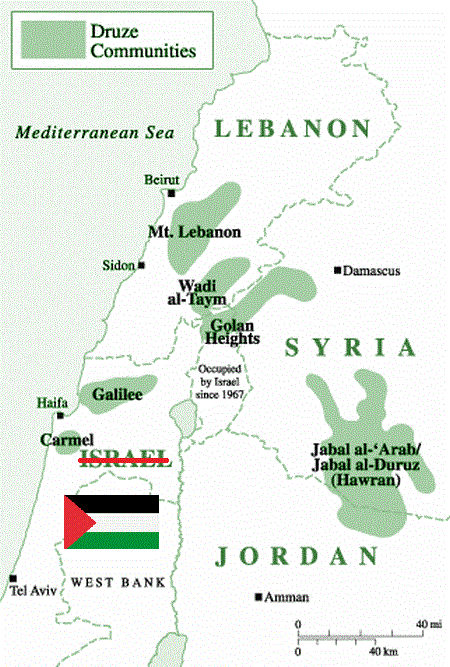 The oldest and most densely populated Druze communities exist in Mount Lebanon and southern Syria, around Jabal al-Druze (literally “Mountain of the Druze”). In the West, they mainly reside in the United States, Canada, Australia, and Germany.
Historical Background
The Druze are an offshoot of the Ismaili Rafidah Shia from the 11th-century Fatimid era. They fought over leadership like all Shia sects and found refuge in the mountains of Lebanon, where they established their own batini and syncretic cult.
Druze Beliefs and Theology
The absolute madness is that the Druze exoterically claim tawhid—much like the Baha’is, Nusayris, Ismailis, Twelvers, and other zanadiqah who loosely affirm the existence of one supreme deity—and self-identify as Al-Muwahhidun (“the monotheists”) or Ahl al-Tawhid (“the people of tawhid”). They denounce Muhammad al-Darazi as a heretic and seek to maintain a more ambiguous identity.
Despite this, the term “Druze” is universally used by outsiders, historians, and scholars to identify them.
The kufr and shirk beliefs of the Druze are many, but to begin with, they do not believe in or practise Shariah as followed in Islam. They have completely abandoned Islamic obligations such as salah (prayer), sawm (fasting in Ramadan), zakah (charity), and hajj (pilgrimage to Makkah)—the very pillars of Islam.
How Do They Justify Abolishing the Entire Shariah?

Easy task for them—it all comes down to one word: Batinism (“esotericism”) on steroids.
- They believe in hidden, mystical meanings behind religious practices, dismissing literal observance of Islamic laws.
- They claim that Shariah was meant only for those who were not “spiritually enlightened” (i.e., non-Druze).
- According to their doctrine, the Druze “Imam” Hamzah ibn Ali (one of their founders) abolished Shariah in 1017 CE, declaring that outward religious obligations were no longer necessary.
- They claim that true worship is internal knowledge (ma‘rifah), not external rituals.
Their Open Rejection of Islam
- They do not pray five times a day as Muslims do. Instead, they gather for secretive meetings in their Khalwah (“prayer halls”).
- They do not fast in Ramadan, arguing that fasting is a “spiritual” concept rather than a physical one.
- Hajj to Makkah is not part of their belief system.
- Unlike Muslims, the Druze do not prohibit alcohol. Many openly drink and disregard halal dietary restrictions.
As if that is not already enough kufr, they top it all off by giving more importance to Rasai’l al-Hikmah (“Epistles of Wisdom“, their sacred book) than to the noble Qur’an, which to them is just one of many divine books that every Dick, Harry, and Abdol-Hossein can interpret as he pleases.
Belief in Incarnation
The Druze believe in Tanasukh al-Arwah (“reincarnation”), meaning that after death, souls are reborn into new bodies. They deny the concept of the Day of Judgment, Paradise, and Hell—a convenient escape for them, as they refuse to do what is the essence of Islam and the literal meaning of Islam: to submit to Allah/God and His commandments.
Since they do not believe in Akhirah (“the afterlife”) in an Islamic sense, they see no need to follow Islamic law as a path to salvation. Instead, they fabricated a completely un-Qur’anic concept of Hindu-esque reincarnation (similar to the Twelver Rafidah Shia belief in “Al-Raj’ah”). They claim that after completing the cycle of rebirth through successive reincarnations, the soul reunites with al-aql al-kulli (“Cosmic Mind”).
Note: Their doctrine of reincarnation and transmigration of the soul is borrowed from both the ancient Greeks and Hinduism.
This belief is essentially Wahdat al-Wujud (“unity of existence”) and fana (annihilation in God)—a concept held by many esoteric polytheists, including the Rafidi Twelver Shia Ruhollah Khomeini, the mushrik who followed esoteric beliefs influenced by Sufi Irfanism. This led Khomeini to distort Tawhid in a mystical manner, aligning with Sufi and philosophical traditions, particularly those of Ibn Arabi (Shaykh al-Akfar) and the Ibn Arabi of the Ajam world, the zindiq Rumi.
The Hidden Teachings of the Druze
- Just as Judaism has the Torah and the Talmud, along with the Oral Law (Mishnah) that is passed down only to other Jews (who also practise witchcraft and grave veneration, similar to Quburis within the Muslim world), the Druze have their own hidden teachings.
-
Similar to the Nusayris (“Alawis”) and Twelver Shia, who deify Ali ibn Abi Talib, may Allah be pleased with him, and to the Ismailis, who in addition deify their so-called “living Imam” (the zindiq Aga Khan, who cannot even speak Arabic or recite Al-Fatihah correctly), the Druze also deify their leaders and do not even pretend to be Muslims.
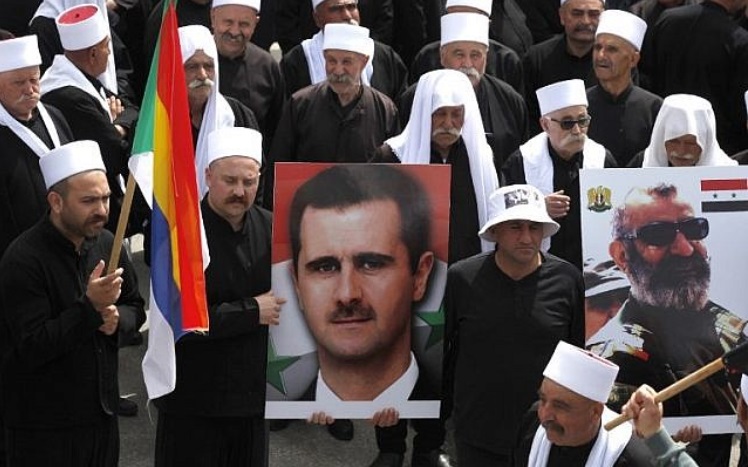
Druze are prominent in the Israel Defense Forces (IDF) and Israeli politics. Their deep-rooted alliance with Israel is symbolised by the phrase “a covenant of blood”, commonly used to describe the strong military bond between Jewish and Druze soldiers.

- Druze in Elite IDF Units – Many Druze serve in elite IDF units, including Sayeret Matkal, one of Israel’s most secretive and prestigious special forces.
- Druze Combat Pilots – There are currently three Druze combat pilots in the Israeli Air Force, an exclusive position rarely given to non-Jews.
- High-Ranking Positions – Druze officers have reached senior ranks in the IDF, commanding entire divisions and special operations forces.
The Druze’s unwavering loyalty to Israel and combat readiness make them one of the most trusted non-Jewish communities in the Zionist state.



Conclusion
The Druze essentially practise a mixture of all sorts of paganism, Shiism, ancient Greek philosophy, Hinduism, Zoroastrianism (Majoos), and more. They are also among the most loyal Arab citizens of the Zionist state, with Netanyahu and his ilk passionately defending the Druze of Syria as if they were his own children.
 EBNHUSSEIN.COM